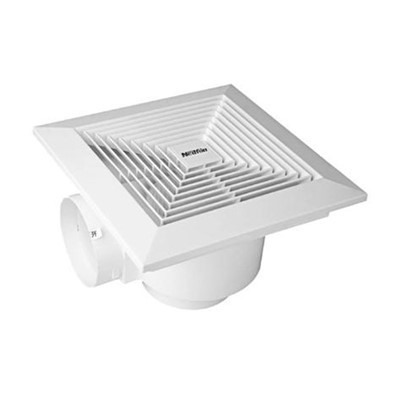
When it comes to ventilation and air movement, fans play a crucial role in various settings, from industrial facilities to residential spaces. Two common types of fans used for air movement are air mover axial fans and centrifugal fans. As a supplier of Air Mover Axial Fans, I often encounter questions from customers about the differences between these two types of fans. In this blog post, I will delve into the characteristics, applications, and advantages of each type to help you make an informed decision when choosing the right fan for your needs.
Working Principles
The fundamental difference between an air mover axial fan and a centrifugal fan lies in their working principles. An axial fan operates by moving air parallel to the axis of the fan blade rotation. The blades of an axial fan are designed to push air straight through the fan, creating a high-volume, low-pressure airflow. This type of fan is similar to a propeller, where the blades rotate to generate a continuous stream of air in a specific direction.
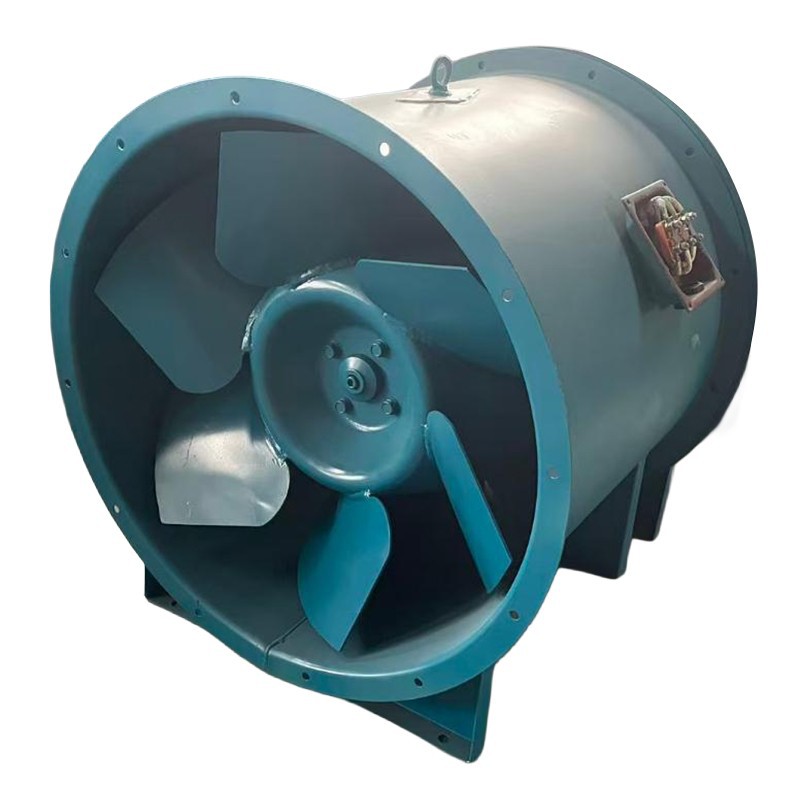

On the other hand, a centrifugal fan works by using centrifugal force to move air. The fan blades are typically curved and arranged in a circular housing. As the blades rotate, they draw air into the center of the fan and then expel it radially outward at a high velocity. This results in a high-pressure, low-volume airflow.
Design and Structure
Axial fans are generally more compact and lightweight compared to centrifugal fans. They consist of a motor, a set of blades, and a housing. The blades are usually straight or slightly curved and are attached to the motor shaft. The housing is designed to direct the airflow and protect the blades. Axial fans can be further classified into different types, such as Axial Box Fan, High Pressure Axial Fan, and Fire Smoke Exhaust Fan, each with its own specific design and application.
Centrifugal fans, on the other hand, have a more complex design. They typically have a volute-shaped housing that surrounds the fan blades. The volute helps to convert the kinetic energy of the air into pressure energy, resulting in a higher pressure output. Centrifugal fans can also be equipped with different types of impellers, such as forward-curved, backward-curved, or radial blades, depending on the specific application requirements.
Performance Characteristics
One of the key performance characteristics of an air mover axial fan is its high airflow rate. Axial fans are capable of moving large volumes of air at relatively low pressures. This makes them ideal for applications where a large amount of air needs to be moved quickly, such as in ventilation systems, cooling towers, and industrial processes. However, axial fans are not as effective at generating high pressures, so they may not be suitable for applications that require a high-pressure airflow.
Centrifugal fans, on the other hand, are known for their high-pressure capabilities. They can generate a significant amount of pressure, making them suitable for applications where air needs to be forced through ducts, filters, or other obstructions. Centrifugal fans are commonly used in HVAC systems, industrial ventilation, and air pollution control applications. However, they typically have a lower airflow rate compared to axial fans.
Applications
The choice between an air mover axial fan and a centrifugal fan depends on the specific application requirements. Axial fans are commonly used in the following applications:
- Ventilation: Axial fans are widely used for general ventilation purposes in buildings, warehouses, and factories. They can provide a large volume of fresh air to improve indoor air quality and remove stale air.
- Cooling: Axial fans are often used in cooling systems, such as computer servers, electronic equipment, and industrial machinery. They can help to dissipate heat and prevent overheating.
- Drying: Axial fans are also used in drying applications, such as in laundry rooms, painting booths, and agricultural drying facilities. They can accelerate the drying process by moving air over the wet surfaces.
Centrifugal fans, on the other hand, are commonly used in the following applications:
- HVAC Systems: Centrifugal fans are an essential component of HVAC systems, where they are used to circulate air through ducts and supply conditioned air to different areas of a building.
- Industrial Ventilation: Centrifugal fans are widely used in industrial settings to remove fumes, dust, and other contaminants from the air. They can be used in applications such as welding shops, chemical plants, and food processing facilities.
- Air Pollution Control: Centrifugal fans are also used in air pollution control systems, such as baghouses and scrubbers. They can help to remove particulate matter and pollutants from the air before it is released into the environment.
Advantages and Disadvantages
Both air mover axial fans and centrifugal fans have their own advantages and disadvantages. Here are some of the key advantages and disadvantages of each type:
Axial Fans
- Advantages:
- High airflow rate: Axial fans can move large volumes of air quickly, making them suitable for applications where a large amount of air needs to be moved.
- Compact and lightweight: Axial fans are generally more compact and lightweight compared to centrifugal fans, making them easier to install and transport.
- Energy-efficient: Axial fans are typically more energy-efficient than centrifugal fans, especially at low pressures.
- Disadvantages:
- Low pressure: Axial fans are not as effective at generating high pressures, so they may not be suitable for applications that require a high-pressure airflow.
- Limited static pressure: Axial fans have a limited ability to overcome static pressure, which means they may not be able to push air through long ducts or filters.
Centrifugal Fans
- Advantages:
- High pressure: Centrifugal fans can generate a significant amount of pressure, making them suitable for applications where air needs to be forced through ducts, filters, or other obstructions.
- Wide range of applications: Centrifugal fans can be used in a wide range of applications, from HVAC systems to industrial ventilation and air pollution control.
- Good static pressure performance: Centrifugal fans have a better ability to overcome static pressure compared to axial fans, which means they can push air through long ducts and filters more effectively.
- Disadvantages:
- Lower airflow rate: Centrifugal fans typically have a lower airflow rate compared to axial fans, which means they may not be suitable for applications where a large amount of air needs to be moved quickly.
- Larger and heavier: Centrifugal fans are generally larger and heavier than axial fans, which can make them more difficult to install and transport.
- Higher energy consumption: Centrifugal fans typically consume more energy than axial fans, especially at high pressures.
Conclusion
In conclusion, the choice between an air mover axial fan and a centrifugal fan depends on the specific application requirements. Axial fans are ideal for applications where a large volume of air needs to be moved quickly at relatively low pressures, while centrifugal fans are better suited for applications that require a high-pressure airflow. As a supplier of Air Mover Axial Fans, I can provide you with a wide range of axial fans to meet your specific needs. If you have any questions or need further information, please feel free to contact me for a consultation. I look forward to working with you to find the right fan solution for your application.
References
- ASHRAE Handbook - Fundamentals. American Society of Heating, Refrigerating and Air-Conditioning Engineers.
- Fan Engineering: The Application, Selection, and Testing of Fans. Buffalo Forge Company.
- Industrial Ventilation: A Manual of Recommended Practice. American Conference of Governmental Industrial Hygienists.