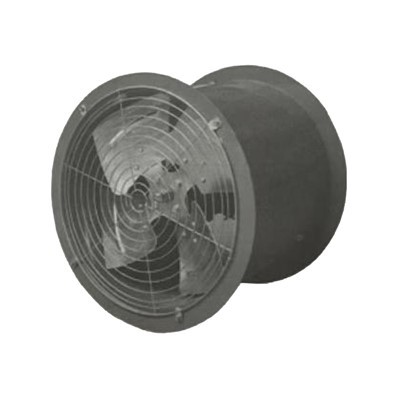
The efficiency of an axial fan is a crucial metric that determines its performance and cost - effectiveness in various applications. As an axial fan supplier, understanding and communicating this efficiency is of utmost importance.
Defining Axial Fan Efficiency
Axial fans are designed to move air parallel to the shaft about which the blades rotate. The efficiency of an axial fan refers to the ratio of the useful work done by the fan in moving air to the energy input it consumes. Mathematically, it can be expressed as:
[ \text{Efficiency} (\eta)=\frac{\text{Power output}}{\text{Power input}} \times 100% ]
The power output is related to the amount of air moved (volumetric flow rate) and the pressure rise across the fan. The power input is the electrical power consumed by the fan motor.
Factors Affecting Axial Fan Efficiency
Blade Design
The shape and design of the fan blades play a significant role in determining efficiency. Aerodynamically designed blades, such as those in an Aerofoil Axial Flow Fan, are more efficient as they can generate more lift with less drag. The angle of the blades, known as the pitch, also affects the flow rate and pressure rise. A well - designed pitch can optimize the balance between the two, leading to higher efficiency.
Motor Efficiency
The motor that drives the axial fan is another critical factor. High - efficiency motors convert a larger proportion of electrical energy into mechanical energy, reducing wasted energy in the form of heat. Modern motors often use advanced technologies such as variable frequency drives (VFDs) to adjust the motor speed according to the required air flow, further improving overall efficiency.
System Resistance
The resistance in the air duct system through which the fan operates can significantly impact efficiency. If the ductwork is too long, has sharp bends, or is clogged, the fan has to work harder to overcome the resistance, leading to a decrease in efficiency. Proper duct design and regular maintenance are essential to minimize system resistance.
Measuring Axial Fan Efficiency
There are several methods to measure the efficiency of an axial fan. One common approach is to use a test rig that can measure the volumetric flow rate, pressure rise, and power consumption. The flow rate can be measured using devices such as anemometers or pitot tubes, while the pressure rise is measured using pressure sensors. The power consumption is measured using a wattmeter.


Another way is to use computational fluid dynamics (CFD) simulations. CFD can model the air flow around the fan blades and predict the performance of the fan under different conditions. This method allows for virtual testing and optimization of the fan design before physical prototypes are built.
Applications and Efficiency Requirements
Axial fans are used in a wide range of applications, each with different efficiency requirements.
Industrial Ventilation
In industrial settings, axial fans are used for ventilation to remove heat, dust, and fumes. High - efficiency fans are essential to reduce energy costs and ensure a safe working environment. For example, in a large manufacturing plant, a well - designed axial fan can significantly reduce the overall energy consumption of the ventilation system.
HVAC Systems
In heating, ventilation, and air - conditioning (HVAC) systems, axial fans are used to circulate air. The efficiency of these fans affects the energy efficiency of the entire HVAC system. By using high - efficiency axial fans, building owners can save on energy bills and reduce their carbon footprint.
Electronic Cooling
Axial fans are also used to cool electronic devices such as computers and servers. In these applications, efficiency is crucial to prevent overheating and ensure the reliable operation of the electronics. A more efficient fan can remove heat more effectively while consuming less power.
Comparing Axial Fans with Other Fan Types
When considering fan options, it's important to compare axial fans with other types of fans, such as centrifugal fans and Mixed Flow Fan.
Centrifugal fans are known for their high - pressure capabilities but may be less efficient in terms of volumetric flow rate compared to axial fans. Axial fans, on the other hand, are better suited for applications that require a large volume of air to be moved at relatively low pressures.
Mixed flow fans combine the characteristics of axial and centrifugal fans. They can provide a higher pressure rise than axial fans while maintaining a relatively high volumetric flow rate. However, their efficiency may vary depending on the specific design and application.
Improving Axial Fan Efficiency
As an axial fan supplier, we are constantly looking for ways to improve the efficiency of our products.
Research and Development
Investing in research and development is crucial to develop new blade designs and motor technologies. By using advanced materials and manufacturing techniques, we can reduce the weight of the fan blades and improve their aerodynamic performance.
Customization
Offering customized solutions allows us to meet the specific requirements of different applications. By tailoring the fan design to the system resistance and flow rate requirements, we can optimize the efficiency of the fan in each application.
Energy - Saving Controls
Implementing energy - saving controls such as VFDs and smart sensors can further improve the efficiency of axial fans. These controls can adjust the fan speed according to the actual demand, reducing energy consumption when the full capacity of the fan is not required.
Conclusion
The efficiency of an axial fan is a complex but essential concept. It is influenced by factors such as blade design, motor efficiency, and system resistance. As an axial fan supplier, we are committed to providing high - efficiency products that meet the diverse needs of our customers. Whether it's for industrial ventilation, HVAC systems, or electronic cooling, our axial fans are designed to deliver optimal performance while minimizing energy consumption.
If you are interested in purchasing axial fans or need more information about our products, we encourage you to contact us for a detailed discussion. We can provide customized solutions based on your specific requirements and help you choose the most efficient fan for your application.
References
- Incropera, F. P., & DeWitt, D. P. (2002). Fundamentals of Heat and Mass Transfer. John Wiley & Sons.
- ASHRAE Handbook - HVAC Systems and Equipment (2017). American Society of Heating, Refrigerating and Air - Conditioning Engineers.
- Fan Engineering, 9th Edition. Buffalo Forge Company.