In the realm of industrial ventilation, explosion-proof axial fans stand as a cornerstone of safety and efficiency. As a dedicated supplier of these critical pieces of equipment, I've delved deep into the intricate mechanisms that make them so effective. Among the many components that compose an explosion-proof axial fan, the blades play a pivotal role that cannot be overstated.
The Fundamentals of Axial Fan Blades
Blades are the heart of an axial fan. They are designed to accelerate and move air in a direction parallel to the fan's axis. In the context of an explosion-proof axial fan, the blades are engineered with additional safety features to prevent the ignition of explosive atmospheres. These blades are typically made from materials that are non-sparking and corrosion-resistant, such as aluminum or special alloys.
The shape and design of the blades are crucial factors in determining the fan's performance. Aerodynamic principles are applied to optimize the blade profile, ensuring maximum air movement with the least amount of energy consumption. The angle of the blades, known as the pitch, affects the volume and pressure of the air flow. A higher pitch angle generally results in a greater volume of air being moved, but may also require more power to operate.
Safety in Explosive Environments
One of the primary functions of the blades in an explosion-proof axial fan is to minimize the risk of explosion. In hazardous environments where flammable gases, vapors, or dusts are present, any source of ignition can lead to a catastrophic event. The non-sparking materials used in the blade construction eliminate the possibility of sparks being generated during normal operation or in the event of a blade strike.
In addition to non-sparking materials, the blades are also designed to prevent overheating. Overheating can occur due to friction or electrical malfunctions, and it can potentially ignite the surrounding explosive atmosphere. The blades are engineered with heat dissipation features, such as fins or special coatings, to ensure that they remain within safe temperature limits.
Efficiency and Performance
Efficiency is another key aspect of the role of the blades in an explosion-proof axial fan. The design of the blades directly impacts the fan's ability to move air effectively. A well-designed blade will have a high efficiency rating, meaning that it can move a large volume of air with minimal energy input. This not only reduces operating costs but also contributes to the overall sustainability of the ventilation system.
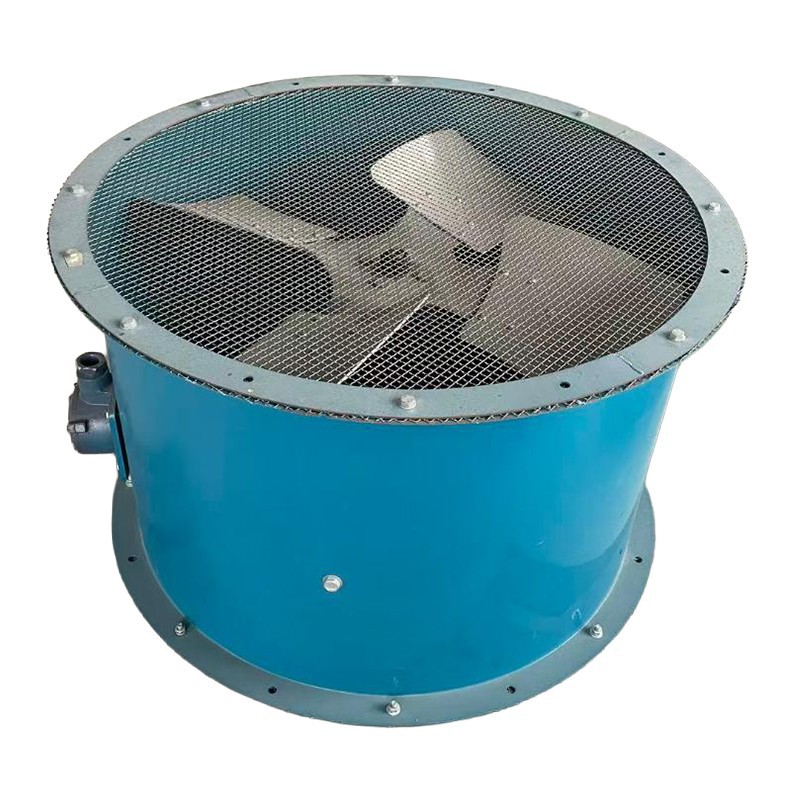

The performance of the blades is also affected by the number of blades on the fan. A greater number of blades can increase the air flow rate and pressure, but it can also increase the noise level and energy consumption. Therefore, a balance must be struck between the number of blades, the blade design, and the specific requirements of the application.
Application-Specific Design
Different industries have different requirements when it comes to explosion-proof axial fans. For example, the chemical industry may require fans that are resistant to corrosive chemicals, while the mining industry may need fans that are able to handle high levels of dust and debris. The blades of an explosion-proof axial fan can be customized to meet these specific needs.
In some applications, such as Atex Axial Fan, the blades may be designed to operate in potentially explosive atmospheres. These fans are certified to meet the ATEX directive, which sets strict safety standards for equipment used in hazardous areas. The blades of an ATEX axial fan are typically made from materials that are specifically tested and approved for use in explosive environments.
In other applications, such as Duct Axial Fan, the blades may be designed to fit inside a duct system. These fans are often used to provide ventilation in buildings, factories, and other enclosed spaces. The blades of a duct axial fan are designed to be compact and efficient, allowing them to fit into small spaces and move air through the duct system effectively.
For applications that require high-pressure air flow, such as Vane Axial Flow Fan, the blades may be designed with vanes to improve the fan's performance. The vanes help to straighten the air flow and reduce turbulence, resulting in a more efficient and effective fan.
Maintenance and Inspection
Proper maintenance and inspection of the blades are essential to ensure the safe and efficient operation of an explosion-proof axial fan. Regular inspections should be carried out to check for signs of wear, damage, or corrosion. Any damaged or worn blades should be replaced immediately to prevent the risk of failure.
In addition to visual inspections, the blades should also be cleaned regularly to remove any dirt, dust, or debris that may accumulate on them. This will help to maintain the fan's efficiency and prevent the build-up of static electricity, which can potentially lead to an explosion.
Contact for Purchase and Consultation
As a leading supplier of explosion-proof axial fans, we understand the importance of providing high-quality products and excellent customer service. If you are in need of an explosion-proof axial fan for your industrial application, we invite you to contact us for more information. Our team of experts will be happy to assist you in selecting the right fan for your specific needs and provide you with a competitive quote.
Investing in a reliable explosion-proof axial fan is crucial for ensuring the safety and efficiency of your industrial ventilation system. Don't compromise on safety – contact us today to discuss your requirements and find the perfect solution for your business.