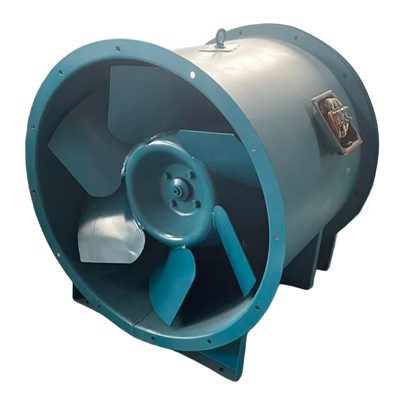
What is the impact of blade shape on the efficiency of a Square Axial Fan?
As a supplier of Square Axial Fans, I've witnessed firsthand the critical role that blade shape plays in determining a fan's efficiency. In this blog post, I'll delve into the science behind how different blade shapes can significantly impact the performance of Square Axial Fans.
Understanding the Basics of Square Axial Fans
Before we discuss the impact of blade shape, it's essential to understand the fundamental principles of Square Axial Fans. These fans are designed to move air parallel to the axis of the fan, making them ideal for applications where high-volume airflow is required. They are commonly used in various industries, including HVAC systems, industrial ventilation, and electronic cooling.
The efficiency of a Square Axial Fan is measured by its ability to convert electrical energy into mechanical energy to move air. A more efficient fan will consume less power while delivering a higher volume of air, resulting in cost savings and improved performance.
The Role of Blade Shape in Fan Efficiency
The blade shape of a Square Axial Fan has a profound impact on its efficiency. Different blade shapes can affect the airflow pattern, pressure generation, and noise levels of the fan. Here are some of the key ways in which blade shape influences fan efficiency:
Airflow Pattern
The shape of the blades determines how the air is directed as it passes through the fan. A well-designed blade shape can create a smooth and uniform airflow, reducing turbulence and improving the overall efficiency of the fan. For example, curved blades are often used to direct the air in a more efficient manner, allowing for better airflow distribution and reduced energy consumption.
Pressure Generation
The blade shape also affects the pressure generated by the fan. Fans with blades that are designed to generate higher pressure can move air more effectively, especially in applications where there are significant resistance or pressure drops. For instance, fans with backward-curved blades are known for their ability to generate high pressure, making them suitable for applications such as Cased Axial Fan systems.
Noise Levels
In addition to airflow and pressure, blade shape can also impact the noise levels produced by the fan. Fans with poorly designed blades can create excessive noise due to turbulence and vibration. By using blades with a more aerodynamic shape, the noise levels can be significantly reduced, making the fan more suitable for applications where quiet operation is required.
Different Blade Shapes and Their Impact on Efficiency
There are several different blade shapes commonly used in Square Axial Fans, each with its own unique characteristics and impact on efficiency. Let's take a closer look at some of the most common blade shapes:
Straight Blades
Straight blades are the simplest and most common blade shape used in Square Axial Fans. They are easy to manufacture and provide a relatively high volume of airflow. However, straight blades are not as efficient as other blade shapes, as they tend to create more turbulence and generate less pressure.
Curved Blades
Curved blades are designed to direct the air in a more efficient manner, reducing turbulence and improving the overall efficiency of the fan. They are often used in applications where high-volume airflow and low noise levels are required. Curved blades can be further classified into forward-curved and backward-curved blades, each with its own advantages and disadvantages.
- Forward-Curved Blades: Forward-curved blades are designed to move air in a forward direction, creating a high-volume airflow at a relatively low pressure. They are commonly used in applications such as Duct Axial Fan systems, where a large volume of air needs to be moved over a short distance.
- Backward-Curved Blades: Backward-curved blades are designed to generate high pressure at a relatively low volume of airflow. They are more efficient than forward-curved blades and are commonly used in applications where high pressure is required, such as Axial Roof Fan systems.
Airfoil Blades
Airfoil blades are designed to mimic the shape of an aircraft wing, providing a smooth and efficient airflow. They are the most efficient blade shape available, as they generate a high volume of airflow at a relatively low pressure. Airfoil blades are commonly used in high-performance Square Axial Fans, where efficiency and quiet operation are critical.


Choosing the Right Blade Shape for Your Application
When choosing a Square Axial Fan, it's important to consider the specific requirements of your application. Factors such as the required airflow, pressure, noise levels, and energy efficiency should all be taken into account. Here are some tips to help you choose the right blade shape for your application:
- High-Volume Airflow: If you need to move a large volume of air, a fan with forward-curved blades or straight blades may be the best choice. These blade shapes are designed to provide a high volume of airflow at a relatively low pressure.
- High-Pressure Applications: If you need to move air against a significant resistance or pressure drop, a fan with backward-curved blades or airfoil blades may be more suitable. These blade shapes are designed to generate high pressure at a relatively low volume of airflow.
- Quiet Operation: If noise levels are a concern, a fan with curved blades or airfoil blades may be the best choice. These blade shapes are designed to reduce turbulence and vibration, resulting in quieter operation.
Conclusion
In conclusion, the blade shape of a Square Axial Fan has a significant impact on its efficiency. By choosing the right blade shape for your application, you can improve the performance of your fan, reduce energy consumption, and lower operating costs. As a supplier of Square Axial Fans, we offer a wide range of blade shapes and configurations to meet the specific needs of our customers. If you're interested in learning more about our products or discussing your specific requirements, please don't hesitate to contact us for a detailed consultation. We look forward to working with you to find the perfect solution for your ventilation needs.
References
- Smith, J. (2018). Fan Engineering: The Application of Fans and Blowers. New York: Wiley.
- ASHRAE Handbook: Fundamentals. (2017). Atlanta: American Society of Heating, Refrigerating and Air-Conditioning Engineers.
- Fink, R. M. (2016). Industrial Ventilation: A Manual of Recommended Practice. Cincinnati: ACGIH.