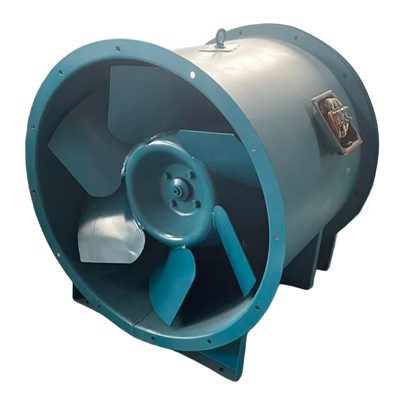
As a supplier of Silent Centrifugal Fans, I've witnessed firsthand the transformative impact these devices have on air circulation in various settings. In this blog, I'll delve into the air circulation effect of a silent centrifugal fan, exploring its principles, applications, and benefits.
Understanding the Basics of Centrifugal Fans
Centrifugal fans operate on a simple yet effective principle. They use a rotating impeller to draw air into the center of the fan and then expel it radially at high speed. This process creates a pressure difference that drives the air movement. Unlike axial fans, which move air parallel to the axis of the fan, centrifugal fans can generate higher pressures and are more suitable for applications where air needs to be pushed through ducts or other restricted spaces.
The silent centrifugal fan, as the name suggests, is designed to operate quietly while still providing efficient air circulation. This is achieved through a combination of advanced design features, such as aerodynamic impellers, sound - absorbing materials, and precision - engineered motors.
How Silent Centrifugal Fans Affect Air Circulation
1. Enhanced Airflow
One of the primary effects of a silent centrifugal fan on air circulation is the ability to generate a significant amount of airflow. The high - speed rotation of the impeller creates a powerful suction that draws air into the fan. Once inside, the air is accelerated and directed outwards, creating a strong stream of air. This enhanced airflow can effectively move air across large areas, ensuring that fresh air is distributed evenly and stagnant air is removed.
For example, in a large industrial warehouse, a silent centrifugal fan can be used to circulate air throughout the space. The fan can draw in fresh air from outside and push it into the warehouse, replacing the stale air. This not only improves the air quality but also helps in maintaining a comfortable working environment.
2. Pressure Generation
Silent centrifugal fans are capable of generating high pressures. This is crucial in applications where air needs to be forced through long ducts or against resistance. For instance, in a ventilation system for a multi - story building, the fan needs to overcome the friction in the ducts and the pressure differences between different floors. The high - pressure output of a silent centrifugal fan allows it to push air through these ducts effectively, ensuring proper air circulation throughout the building.
3. Directional Airflow
Another advantage of silent centrifugal fans is their ability to provide directional airflow. The design of the fan housing and the impeller allows the air to be directed in a specific direction. This can be useful in applications where targeted air circulation is required. For example, in a drying process, the fan can be positioned to direct the airflow towards the wet materials, accelerating the drying process.


Applications of Silent Centrifugal Fans
1. HVAC Systems
Silent centrifugal fans are widely used in Heating, Ventilation, and Air Conditioning (HVAC) systems. In these systems, the fans are responsible for circulating air through the ducts, ensuring that the conditioned air is distributed evenly throughout the building. The quiet operation of the silent centrifugal fan is particularly beneficial in residential and commercial buildings, where noise can be a major concern.
2. Industrial Ventilation
In industrial settings, silent centrifugal fans play a crucial role in maintaining a safe and healthy working environment. They are used to remove harmful fumes, dust, and heat from the workplace. For example, in a manufacturing plant, a Centrifugal Blower for Dust Collector can be used to collect and remove dust particles from the air, preventing them from being inhaled by workers.
3. Electronic Cooling
Silent centrifugal fans are also used in electronic devices to cool the components. As electronic devices generate heat during operation, proper cooling is essential to prevent overheating and ensure their reliable performance. The silent centrifugal fan can be used to draw in cool air and expel the hot air, maintaining a stable temperature inside the device.
Benefits of Using Silent Centrifugal Fans
1. Quiet Operation
The most obvious benefit of a silent centrifugal fan is its quiet operation. This is achieved through advanced design and engineering techniques that minimize noise generation. In residential and commercial settings, the quiet operation of the fan ensures that it does not disrupt the normal activities of the occupants.
2. Energy Efficiency
Silent centrifugal fans are designed to be energy - efficient. They use less power compared to other types of fans while still providing the same or better air circulation. This not only reduces the energy consumption but also lowers the operating costs.
3. Durability
These fans are built to last. They are made of high - quality materials and are designed to withstand harsh operating conditions. This means that they require less maintenance and have a longer lifespan, providing a cost - effective solution for air circulation.
Our Product Range
As a supplier of Silent Centrifugal Fans, we offer a wide range of products to meet the diverse needs of our customers. Our Silent Centrifugal Fan series is designed to provide efficient and quiet air circulation in various applications. We also offer Square Inline Centrifugal Fan, which are ideal for applications where space is limited.
Contact Us for Purchase and Consultation
If you are looking for a reliable solution for air circulation, our silent centrifugal fans are the perfect choice. We have a team of experts who can help you select the right fan for your specific needs. Whether you are in the HVAC industry, industrial ventilation, or electronic cooling, we can provide you with the best products and services. Contact us today to start the procurement negotiation process and experience the superior air circulation effect of our silent centrifugal fans.
References
- "Centrifugal Fans: Principles, Performance, and Applications" by A. J. Chapman
- "HVAC Systems Design Handbook" by C. A. ASHRAE
- "Industrial Ventilation: A Manual of Recommended Practice" by the American Conference of Governmental Industrial Hygienists