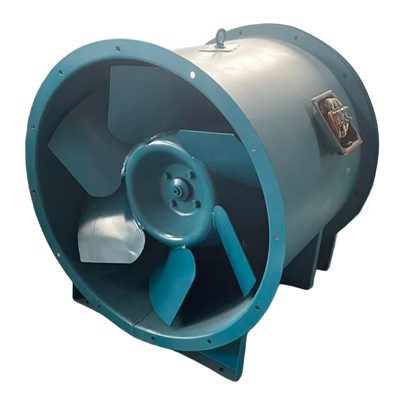
Hey there! As a supplier of cased axial fans, I'm super stoked to walk you through how these nifty devices work. Cased axial fans are pretty common in a whole bunch of industries, from HVAC systems to industrial ventilation. So, let's dig in and find out what makes them tick.
The Basics of a Cased Axial Fan
First off, what exactly is a cased axial fan? Well, it's a type of fan that moves air in a straight line, parallel to the fan's axis. The "cased" part means it's enclosed in a housing, which helps direct the airflow and can also provide some protection for the fan blades.
The main components of a cased axial fan include the fan blades, the motor, and the casing. The fan blades are the key players here. They're designed to spin and create a pressure difference that sucks air in from one side and blows it out the other. The motor is what powers the blades, and the casing keeps everything in place and guides the airflow.
How the Fan Blades Work
The fan blades are where the magic happens. They're shaped like little airfoils, kind of like the wings of an airplane. When the blades spin, they create a low-pressure area on one side and a high-pressure area on the other. This pressure difference is what causes air to move.
The shape and angle of the blades are really important. Different blade designs can produce different amounts of airflow and pressure. For example, blades with a steeper angle will generally produce more pressure but less airflow, while blades with a shallower angle will produce more airflow but less pressure.
The number of blades also affects the performance of the fan. More blades can generally produce more pressure, but they can also increase the power consumption and noise level of the fan. So, it's all about finding the right balance for your specific application.
The Role of the Motor
The motor is what drives the fan blades. It converts electrical energy into mechanical energy, which makes the blades spin. There are different types of motors that can be used in cased axial fans, including AC motors and DC motors.


AC motors are the most common type of motor used in cased axial fans. They're relatively simple and inexpensive, and they can operate on standard household or industrial electrical power. DC motors, on the other hand, are more efficient and can provide better control over the speed of the fan. They're often used in applications where energy efficiency is a priority, such as in some HVAC systems.
The size and power of the motor are also important factors to consider. A larger motor will generally be able to drive the fan blades faster and produce more airflow and pressure. However, it will also consume more energy and may be more expensive. So, you need to choose a motor that's appropriate for the size and requirements of your fan.
The Function of the Casing
The casing of a cased axial fan serves several important functions. First, it helps to direct the airflow. By enclosing the fan blades in a housing, the casing can prevent the air from spreading out in all directions and instead channel it in a specific direction. This can improve the efficiency of the fan and make it more effective at moving air.
Second, the casing provides some protection for the fan blades. It can prevent objects from getting into the fan and damaging the blades, which can extend the lifespan of the fan. Additionally, the casing can help to reduce the noise level of the fan by containing the sound within the housing.
Finally, the casing can also play a role in the installation and mounting of the fan. It can provide a convenient way to attach the fan to a wall, ceiling, or other structure, and it can also help to ensure that the fan is properly aligned and balanced.
Applications of Cased Axial Fans
Cased axial fans are used in a wide variety of applications. One of the most common applications is in HVAC systems. They're used to circulate air in heating, ventilation, and air conditioning systems, helping to maintain a comfortable temperature and air quality in buildings.
In industrial settings, cased axial fans are often used for ventilation and cooling. They can be used to remove hot air, fumes, and dust from factories, warehouses, and other industrial facilities. They can also be used to cool equipment and machinery, helping to prevent overheating and extend the lifespan of the equipment.
Another application of cased axial fans is in electronics cooling. They're used to cool computer servers, power supplies, and other electronic devices. By removing heat from these devices, cased axial fans can help to prevent damage and improve the performance of the electronics.
Comparing with Other Types of Fans
There are other types of fans out there, such as High Pressure Axial Fan, Mixed Flow Fan, and Explosion Proof Axial Fan. Each type of fan has its own advantages and disadvantages, and the choice of fan depends on the specific application.
High pressure axial fans are designed to produce a high amount of pressure, which makes them suitable for applications where the air needs to be pushed through a long duct or a narrow opening. Mixed flow fans combine the features of axial and centrifugal fans, and they can provide a good balance of airflow and pressure. Explosion proof axial fans are designed to be used in hazardous environments where there is a risk of explosion, and they're built to meet strict safety standards.
Compared to these other types of fans, cased axial fans are generally more efficient at moving large volumes of air at relatively low pressures. They're also relatively simple and inexpensive, which makes them a popular choice for many applications.
Conclusion
So, there you have it! That's how a cased axial fan works. It's a simple but effective device that can be used in a wide variety of applications. Whether you're looking to cool your home, ventilate an industrial facility, or keep your electronics from overheating, a cased axial fan might be the right choice for you.
If you're interested in purchasing cased axial fans for your project, I'd love to have a chat with you. We offer a wide range of cased axial fans with different sizes, capacities, and features to meet your specific needs. Just reach out, and we can discuss the best options for you.
References
- ASHRAE Handbook - Fundamentals
- Fan Engineering, 9th Edition