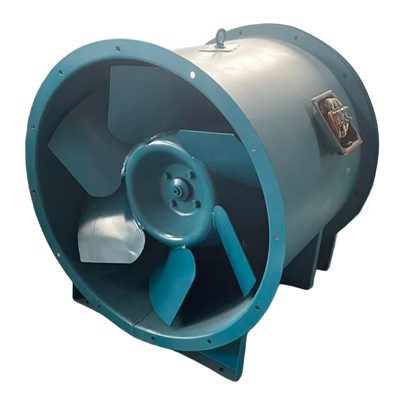
The design of fan blades is a crucial factor that significantly influences the performance of a duct centrifugal fan. As a dedicated duct centrifugal fan supplier, we understand the intricate relationship between fan blade design and fan performance. In this blog, we will delve into the various aspects of how fan blade design impacts the performance of duct centrifugal fans.
Aerodynamic Efficiency
One of the primary ways fan blade design affects the performance of a duct centrifugal fan is through aerodynamic efficiency. The shape, angle, and curvature of the fan blades play a vital role in determining how effectively the fan can move air. Well - designed fan blades are engineered to minimize air resistance and maximize the amount of air that can be moved with a given amount of energy input.
For instance, forward - curved blades are known for their high volume flow rate at relatively low pressures. These blades have a curvature that is oriented in the direction of rotation. They are often used in applications where large volumes of air need to be moved, such as in ventilation systems for large buildings. The forward - curved design allows the blades to capture and move air more efficiently, resulting in a higher airflow rate.
On the other hand, backward - curved blades are more efficient at higher pressures. Their curvature is opposite to the direction of rotation. These blades are commonly used in industrial applications where high - pressure air movement is required, such as in air - handling units for manufacturing facilities. The backward - curved design reduces the likelihood of air separation and turbulence, which in turn improves the overall efficiency of the fan.
Pressure Generation
Fan blade design also has a direct impact on the pressure generation capabilities of a duct centrifugal fan. The shape and pitch of the blades determine how much pressure can be developed as the air passes through the fan.
Blades with a steeper pitch can generate higher pressures. This is because a steeper pitch means that the blades are able to impart more energy to the air molecules, causing them to move with greater force. In applications where high - pressure air is needed, such as in pneumatic conveying systems, fans with blades designed for high - pressure generation are essential.
The number of blades also affects pressure generation. Generally, fans with a larger number of blades can generate higher pressures. However, this also increases the resistance to airflow, which can reduce the overall efficiency of the fan. Therefore, a balance must be struck between the number of blades and the desired pressure and efficiency levels.
Noise Levels
Another important aspect of fan performance that is influenced by blade design is noise levels. Poorly designed fan blades can create a significant amount of noise as the air passes over them. This is often due to turbulence and air separation.
Blades with smooth surfaces and proper aerodynamic profiles can reduce noise levels. For example, using airfoil - shaped blades can help to minimize turbulence and reduce the noise generated by the fan. Additionally, the spacing between the blades can also affect noise. If the blades are too close together, it can cause increased turbulence and noise.
As a duct centrifugal fan supplier, we offer a range of fan blade designs to meet different noise requirements. Our Explosion Proof Centrifugal Fan models are designed with advanced blade technology to ensure quiet operation, making them suitable for environments where noise is a concern.


Energy Consumption
The design of fan blades has a direct impact on the energy consumption of a duct centrifugal fan. A more efficient blade design can reduce the amount of energy required to move a given volume of air. This is not only beneficial from an environmental perspective but also from a cost - savings point of view.
Fans with high - efficiency blades can operate at lower power levels while still achieving the desired airflow and pressure. For example, our Inline Centrifugal Exhaust Fan is equipped with blades that are designed for maximum energy efficiency. These blades are carefully engineered to minimize energy losses and ensure that the fan operates at its optimal performance level.
Material Selection and Durability
The material used to construct the fan blades also affects the performance and durability of the duct centrifugal fan. Different materials have different properties, such as strength, corrosion resistance, and weight.
For example, aluminum blades are lightweight and have good corrosion resistance, making them suitable for applications where weight is a concern or where the fan will be exposed to corrosive environments. Steel blades, on the other hand, are stronger and more durable, making them ideal for heavy - duty applications.
As a supplier, we offer a variety of blade materials to meet the specific needs of our customers. Our Variable Speed Centrifugal Fan can be equipped with blades made from different materials, depending on the application requirements.
Customization for Specific Applications
At our company, we understand that different applications have different requirements. That's why we offer customized fan blade designs to meet the specific needs of our customers. Whether it's a high - pressure application, a low - noise requirement, or a specific airflow rate, we can design and manufacture fan blades that are tailored to the exact specifications.
For example, in a cleanroom environment, where air quality is of utmost importance, we can design fan blades that are easy to clean and maintain. In an industrial setting where the fan needs to operate under harsh conditions, we can use materials that are resistant to wear and tear.
Conclusion
In conclusion, the design of fan blades has a profound impact on the performance of a duct centrifugal fan. From aerodynamic efficiency and pressure generation to noise levels, energy consumption, and durability, every aspect of fan performance is influenced by the blade design.
As a duct centrifugal fan supplier, we are committed to providing our customers with high - quality fans that are designed to meet their specific needs. Our range of products, including Explosion Proof Centrifugal Fan, Inline Centrifugal Exhaust Fan, and Variable Speed Centrifugal Fan, are all engineered with advanced blade technology to ensure optimal performance.
If you are in the market for a duct centrifugal fan, we invite you to contact us for a detailed discussion about your requirements. Our team of experts will be happy to assist you in selecting the right fan and blade design for your application.
References
- ASHRAE Handbook - HVAC Systems and Equipment. American Society of Heating, Refrigerating and Air - Conditioning Engineers.
- Fan Engineering: The Application, Selection, and Testing of Fans. Buffalo Forge Company.
- Fluid Mechanics: Fundamentals and Applications. Yunus A. Cengel and John M. Cimbala.