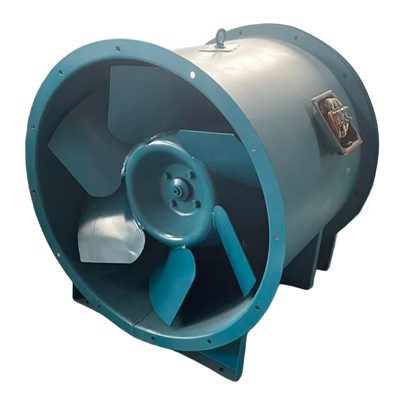
Selecting the right duct axial fan for a low - pressure application can be a bit of a head - scratcher. As a duct axial fan supplier, I've seen firsthand how crucial it is to make the right choice. In this blog, I'll walk you through the key factors to consider when picking a duct axial fan for low - pressure scenarios.
Understanding Low - Pressure Applications
First off, let's get clear on what low - pressure applications are. These are situations where the pressure requirements are relatively small. For example, in a small office space, a warehouse with good ventilation, or a light - duty industrial area where the air doesn't need to be pushed or pulled against a high resistance.
In low - pressure applications, the main goal is usually to move a large volume of air at a relatively low pressure. This is different from high - pressure applications, where you need to force air through narrow ducts or against significant resistance.
Key Factors to Consider
Airflow Requirements
The most important thing is to figure out how much air you need to move. This is measured in cubic feet per minute (CFM). To calculate this, you'll need to know the volume of the space you're ventilating. For instance, if you have a room that's 10 feet long, 10 feet wide, and 8 feet high, the volume is 10 x 10 x 8 = 800 cubic feet. If you want to exchange the air in this room every 5 minutes, you'll need a fan that can move 800 / 5 = 160 CFM.


Static Pressure
Static pressure is the resistance the fan has to overcome to move air. In low - pressure applications, the static pressure is usually quite low. You can measure it in inches of water column (in. WC). For example, in a simple ventilation system with straight ducts and no major obstructions, the static pressure might be around 0.1 - 0.5 in. WC.
Fan Efficiency
Efficiency is key when it comes to saving energy. A more efficient fan will use less power to move the same amount of air. Look for fans with high efficiency ratings. This not only saves you money on your energy bills but also reduces your carbon footprint.
Noise Level
In many low - pressure applications, especially in office or residential settings, noise can be a big concern. You don't want a fan that sounds like a jet engine. Look for fans that are designed to operate quietly. Manufacturers usually provide noise ratings in decibels (dB). Try to choose a fan with a noise level that's comfortable for your environment.
Types of Duct Axial Fans for Low - Pressure Applications
Axial Roof Fan
An Axial Roof Fan is a great option for low - pressure applications. These fans are typically installed on the roof of a building and are used to exhaust hot or stale air. They're designed to move a large volume of air at a relatively low pressure. They're easy to install and maintain, making them a popular choice for many low - pressure ventilation needs.
Vane Axial Flow Fan
Vane Axial Flow Fans are another good option. These fans have vanes that help to straighten the airflow, which can improve efficiency. They're often used in applications where a higher level of airflow control is needed. They can handle slightly higher static pressures compared to standard axial fans, but they're still suitable for low - pressure applications.
Mixed Flow Fan
Mixed Flow Fans combine the features of axial and centrifugal fans. They can move a large volume of air at a relatively low pressure, and they're also more compact than some other types of fans. This makes them a good choice for applications where space is limited.
Selecting the Right Fan Size
Once you've determined your airflow and static pressure requirements, it's time to select the right fan size. You can usually find fan performance curves provided by the manufacturer. These curves show the relationship between airflow, static pressure, and power consumption.
For example, if you need a fan to move 500 CFM at a static pressure of 0.2 in. WC, you can use the performance curve to find a fan that meets these requirements. Make sure to choose a fan that operates within its optimal range to ensure maximum efficiency and performance.
Installation and Maintenance
Proper installation is crucial for the performance of your duct axial fan. Make sure to follow the manufacturer's installation instructions carefully. Incorrect installation can lead to reduced efficiency, increased noise, and even premature failure of the fan.
Regular maintenance is also important. This includes cleaning the fan blades, checking the motor, and lubricating any moving parts. A well - maintained fan will last longer and operate more efficiently.
Conclusion
Selecting the right duct axial fan for a low - pressure application requires careful consideration of your airflow requirements, static pressure, fan efficiency, and noise level. By understanding the different types of fans available, such as Axial Roof Fans, Vane Axial Flow Fans, and Mixed Flow Fans, and choosing the right size, you can ensure that your ventilation system works effectively and efficiently.
If you're in the market for a duct axial fan for a low - pressure application, don't hesitate to reach out. We're here to help you find the perfect fan for your needs. Whether you have questions about airflow, static pressure, or installation, our team of experts is ready to assist you. Contact us today to start the procurement process and get the best fan for your project.
References
- Fan Engineering Handbook, 4th Edition
- ASHRAE Handbook of Fundamentals